

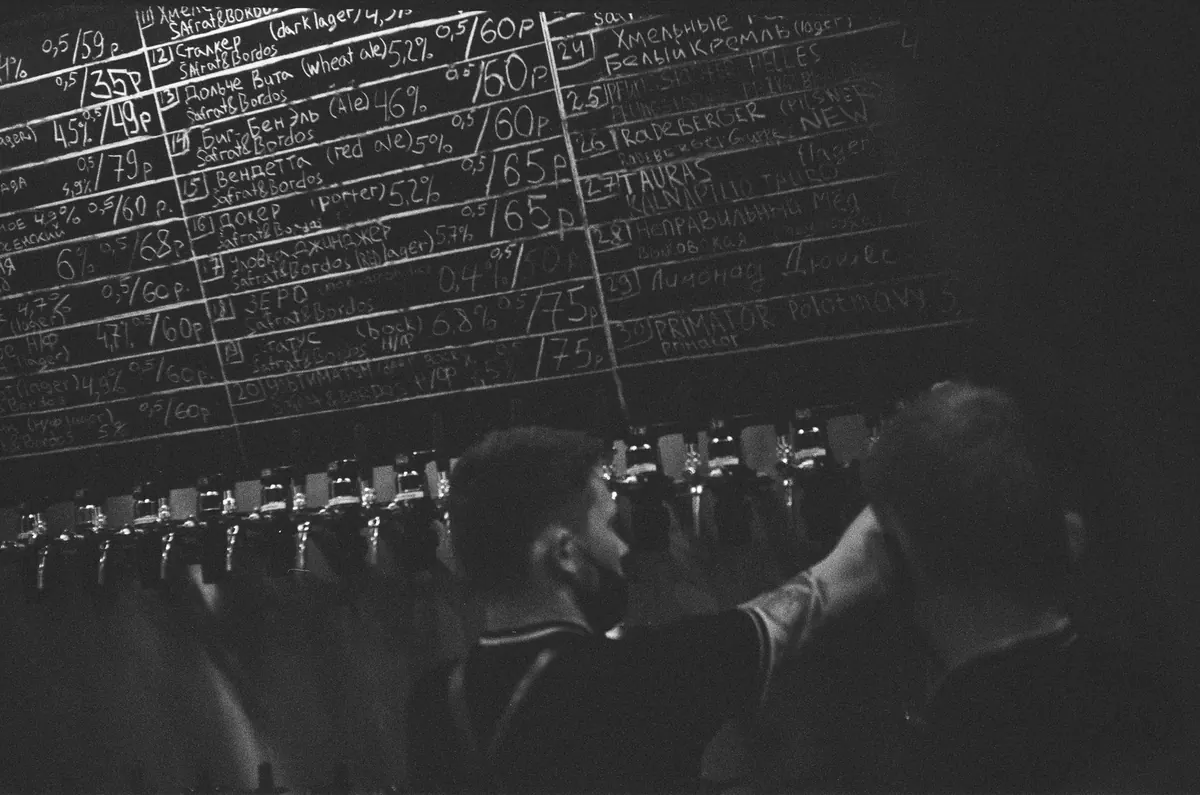
Twenty taps is not a test. It's a list, written by someone who wants you to find something you'll enjoy. And yet you step up, the board is a wall of chalk, the bartender is waiting, someone behind you is ordering four drinks, and you say the name of the beer you always drink. Nothing wrong with that beer. There's something wrong with never finding out what else is on tap. Here's a method that takes about ninety seconds and works in any pub.
Read the Board Before You Read the Room
Tap lists are written for people who already know beer, which is why they can look like a foreign menu. Before you read a single beer name, work out how the list is organised. Most boards follow one of four patterns: light to dark, grouped by brewery, grouped by style, or split between keg and cask. Some are a numbered grid; others run a single column with the strongest at the bottom.
The shape of the list tells you where to look. Want something crisp? You can usually stop reading after the first third of the board. Want a stout? Skip to the end. Then do two passes. First, scan for anything you recognise — a style you like, a brewery you've had before. Second, read the descriptions and use them to eliminate. Crossing out six beers you don't want is faster than ranking twenty you might.
The Five Details That Predict Whether You'll Like It
Every tap list gives you the same handful of clues. Read them in this order.
- Style. Pilsner, saison, west coast IPA, milk stout — the style does most of the work. If you know you love one and hate another, you're already done.
- ABV. The percentage tells you more than strength alone. A 9% double IPA drinks very differently from a 4% bitter, and it will arrive in a smaller glass.
- Bitterness cues. Words like hoppy, double, dank or resinous point to something punchy and bitter. Soft, malt-forward and toasty point the other way.
- Flavour descriptors. Grapefruit, pine, tropical fruit, coffee, chocolate, banana, hay, funk. These are the brewer's own tasting notes. Treat them as clues, not promises.
- Pour format. Keg, cask or nitro. Cask ale is served warmer and softer; nitro pours are creamier. Neither is better, they're just different.
How to Ask for a Sample
Sampling is normal bar behaviour, not a nuisance, and most pubs are happy to pour a small taste. The trick is doing it without holding up the queue.
Ask for two at a time, not six. Point at the board and give the bartender both pieces of information: tap number and name. "Could I taste the number eight, the rye pale?" is easy to answer. "What's good?" is not, especially at eight in the evening.
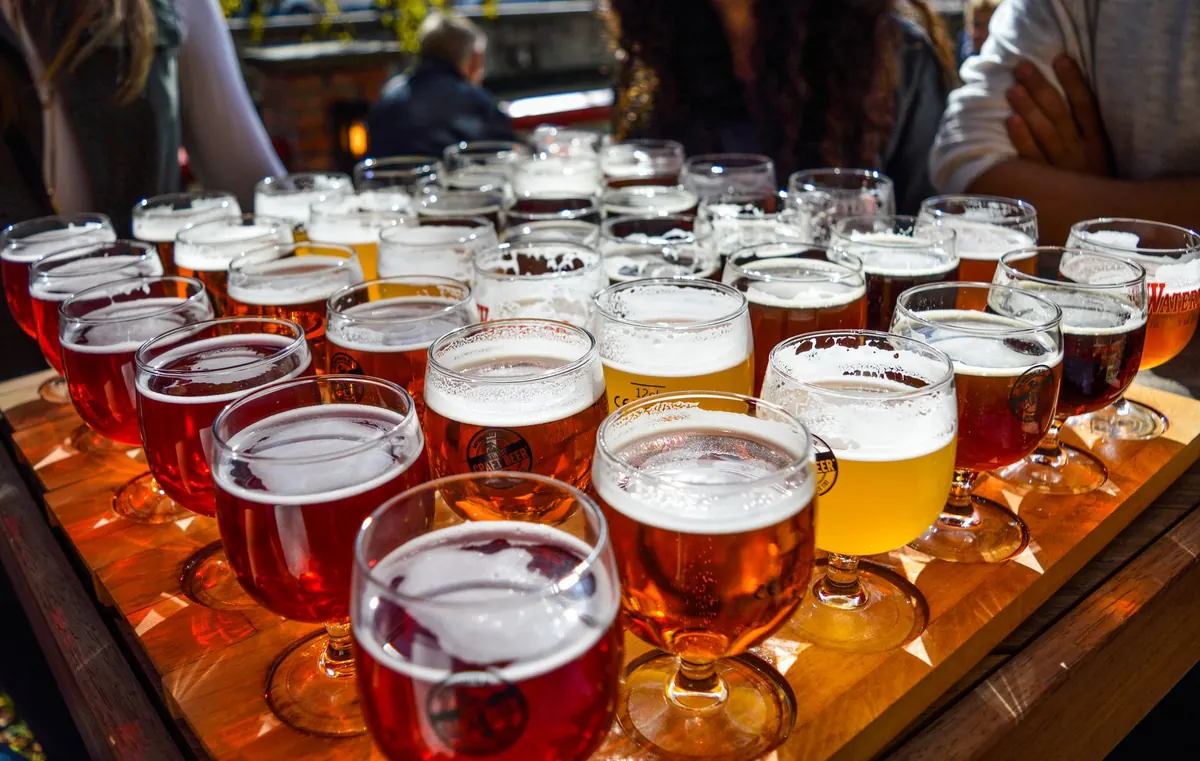
If you're genuinely torn between four or five, ask whether they do a flight or a taster tray. Many taprooms do. On a quiet Tuesday afternoon you can be leisurely about it; on a packed Friday, pick your two, taste, and commit.
Two samples, one decision. Any more and you're ordering a drink in instalments.
It also helps to order something. Tasting three beers and walking away is a fine way to be remembered for the wrong reason.
A Three-Step Method That Works Every Time
- Pick a lane. Decide roughly what you want before you read any names: crisp and light, hoppy, dark and malty, or sour and funky. Four options are easier to choose between than twenty.
- Shortlist two. Find the best-looking beer in that lane that you recognise, and the best-looking one you've never heard of.
- Sample, then order the smaller pour. If the bar offers a half or a ten-ounce glass, take it for round one. If you love it, round two is a pint. If you don't, you've lost almost nothing.
There's a quiet advantage in step two. Ordering a style you know from a brewery you don't is the lowest-risk way to try something new. You already know what a porter should taste like. Now find out how that brewery makes one.
Sizes, Strength, and the Question You Should Just Ask
Glassware varies more than people expect. A pint might be an imperial pint in a British pub or a sixteen-ounce pour in a taproom, and strong beers often arrive in a snifter whether you asked for it or not. If the size isn't on the board, ask. Nobody has ever been mocked for wanting to know what they're getting.
Two practical habits. Drink water between rounds, especially with anything above roughly 7%. And if you're driving, keep the sampling to a minimum — a few sips across four beers adds up faster than one pint. If you're pregnant, on medication, or managing a health condition, that's a conversation for a doctor rather than a beer guide.
When the Beer Isn't What You Expected
There's a difference between a beer you don't like and a beer that's faulty. Flat, buttery, vinegary or cardboard-tasting beer has a problem in the keg or the line, and it's reasonable to say so politely and ask for something else. Most bars will swap it without argument.
Not liking a well-made beer is different. If the saison tastes exactly as the board described and you simply don't want a second sip, that isn't the bar's fault. Order a half of something else, or split it with someone at the table. Ask what the bartender would drink instead — that question has rescued more evenings than any amount of studying the chalk.
The Only Rule That Really Matters
Start with one question at the bar: "If you were having one more, which would it be?" Then order that in the smallest size the pub offers. Twenty taps stop being intimidating the moment you accept that you're not choosing the best beer on the board. You're choosing the next one.
Come back and try a different lane. Order the style you've never heard of, in the smallest glass, beside the one you always drink. After four or five visits you'll have your own map of the board — and the bartender will have one too: the person who knows what they like and isn't afraid to ask.
Photo: Viktorya Sergeeva 🫂 / Pexels