

The first proper cold snap arrives and the beer board changes overnight. Out go the straw-coloured session ales and the fruity pale; in come the porters, the old ales and anything with "winter" printed on the pump clip. That shift is partly marketing. It is also centuries of brewing logic finally catching up with what your palate has been telling you since October.
What Makes an Ale Seasonal?
Malt and hops are agricultural crops with harvest windows. Autumn brings fresh hops and new barley, and brewers responded by making beers designed to sit in the cellar until the weather turned. Stronger, darker, more heavily hopped beers kept better than light ones — and by February, a rich, warming pint was exactly what people wanted alongside a stew.
Modern brewing has flattened the seasons. Cold-chain delivery and year-round imports mean you can drink a hazy pale ale in a blizzard or a dry stout in a heatwave. Nobody is stopping you. But style still follows appetite. When it is four degrees outside, your body wants malt, body and a touch of sweetness. When the pub garden is baking, it wants bitterness, carbonation and something cold. That is the real divide: not the calendar, but what the beer is built to do.
Winter Ales: Malt, Weight and Warmth
Winter ales lean dark and generous. Look for roasted barley, chocolate malt, crystal malt and Munich malt in the grain bill, giving coffee, dark chocolate, dried fruit, toffee and toast. Hops usually balance rather than lead — enough bitterness to stop the beer tasting like pudding, often earthy English varieties rather than tropical ones.
- Porter and stout — the everyday end of the dark spectrum. A 4.5% porter is a fine session beer; an imperial stout at 9% is a shared bottle and a slow evening.
- Winter warmers and old ales — amber to ruby, 5–7%, with toffee, raisin and a soft, vinous finish. Many include spice, though the good ones keep it subtle.
- Barley wine and Scotch ale — strong, sweet and sipped. Buy a half, not a pint, and let it warm in the glass.
- Belgian dubbels and quads, doppelbock — dark fruit, brown sugar, plum. Excellent with roast meat and strong cheese.
Serve these cellar-cool, around 11–13°C for cask. Don't let anyone tell you that means warm: a dark beer at proper room temperature in a heated pub tastes flabby, while a couple of degrees cooler sharpens the roast character.
Summer Ales: Pale, Bitter and Built to Refresh
Summer ales do the opposite job. Pale or pilsner malt gives a light body; hops bring grapefruit, lemon, gooseberry, cut grass and elderflower. Carbonation is higher, the finish is drier, and the whole point is that you want a second pint.
- Golden ale and bitter — 3.8–4.3%, biscuity and gently bitter. The classic English summer session.
- Pale ale and session IPA — citrus and resin, more hop-forward, still drinkable at 4–5%.
- Witbier, saison and weissbier — wheat gives haze and a spritzy finish; saison adds pepper and lemon peel.
- Pilsner, kellerbier and helles — clean, cold and made for a warm afternoon. Drink them fresh and young.
Serve lagers and wheat beers properly cold, and cask golden ales at cellar temperature. If you are in the sun for hours, alternate pints with water, and remember that a low-ABV session beer only stays sessionable if you are not on your fifth.
Winter Pint, Summer Pint: The Same Beer Board
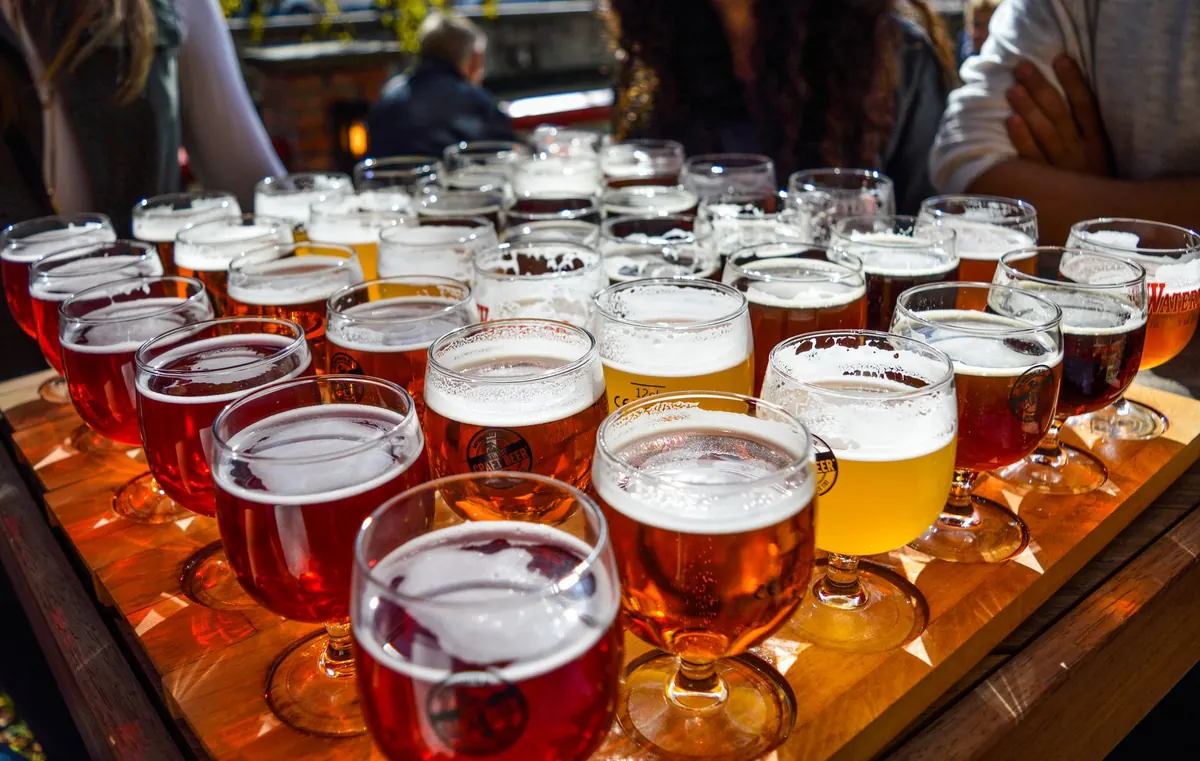
Walk into the same pub in January and July and you are making two different sets of decisions:
- Colour: black, ruby and amber in winter; gold, straw and hazy pale in summer.
- Balance: malt-led and sweet-leaning in winter; hop-led and dry in summer.
- Strength: 5–7% is normal for winter releases; 3.8–4.5% is the summer sweet spot.
- Pace: halves and slow sips in winter; pints and a steadier rhythm in summer.
- Food: roasts, pies and blue cheese in winter; fish, salads and grilled vegetables in summer.
How to Choose Well at the Bar
- Read the whole board before ordering. Check the ABV and the style, not just the name.
- Ask for a taste. A good pub will pour you a mouthful of anything on cask. Far cheaper than a pint you don't want.
- Look at what is turning over. A beer sitting on the same pump for a fortnight is rarely at its best.
- Match strength to the length of your visit. If you have the whole afternoon, start low and stay low.
- Ask what is new in. Landlords are usually proud of the seasonal they have just put on, and you'll get a better steer than the pump clip gives you.
When to Break the Rules
Seasons are a guide, not a law. A dry stout with oysters in August is one of the great pairings. A crisp golden ale alongside Boxing Day ham works beautifully. If it is 15°C and drizzling in July, a mild or a porter will taste better than a cold lager you are drinking out of habit. And a fresh pilsner in a warm February pub is entirely reasonable.
One caution: strong winter beers creep up on you, especially above 7%. Alternate with water, eat something, and know your own limits. If you are pregnant, taking medication or managing a health condition, follow your doctor's advice rather than the pump clip.
Finding Your Seasonal Rhythm
Try keeping a note of what you drank, where and in what weather, then look back at it in a year. You will find your own pattern: the beers you reach for in a cold snap, the ones that taste best in a beer garden, and the handful that work all year round. Ask for tasters, buy halves of the strong ones, and let a pub's changing board be one of the small pleasures of the year rather than a puzzle to solve.
Photo: Darlene Alderson / Pexels